Having a dog around the house—whether that’s a brand-new buddy, a foster, or a guest—is wonderful and exciting. It also means dog-proofing.
To dog-proof your home, you’ll want to consider each room from a dog’s height and perspective, removing any hazards and relocating any valuable objects or special furniture to protect them from accidental damage—at least until your dog is settled in.

To find out the best ways to dog-proof a home, we reached out to veterinarian Dr Nell Ostermeier, veterinary surgeon and advisor at Figo Pet Insurance. She offers a combination of room-specific proofing strategies and advice on challenges such as chewers and diggers.
How To Dog-Proof the Kitchen and Dining Room
The kitchen and dining rooms are often some of a dog’s favourite areas, thanks to the higher-than-usual odds of food falling on the floor. To dog-proof a kitchen and dining room, try the following.
- Keep all food out of reach in cabinets and on shelves. Some foods can be dangerous for dogs to eat, and even if the food doesn’t pose a threat, the packaging can be a problem.
- Keep worktops and tables clear to minimise a dog’s temptation to counter-surf, especially for a big dog. Avoid leaving hot pans or dishes out, just in case.
- Use a dog-proof lidded rubbish bin, or restrict your dog’s access to the rubbish by keeping it in a closed cupboard under the worktop.
- Keep dogs away from cooking areas where hot foods or liquids could spill. A “place” cue helps redirect a curious dog—but if your pup hasn’t learned that one, a dog gate can help!
- Unplug appliances after use, and don’t keep any dangling cords within a dog’s reach.
- Keep any kitchen cleaning supplies on a high shelf or in a closed cupboard.
How To Dog-Proof the Bathroom
Bathrooms often contain dangerous items such as cleaning supplies, medications, and other chemicals, so it’s especially important to dog-proof them.
- Shelve items such as cleaning supplies, medication, and washing powder or liquid up high and out of reach. It’s also a good idea to switch to dog-safe cleaning products.
- Keep bins securely covered so that pets can’t get into the rubbish.
- Consider installing childproof latches on cupboards and low drawers.
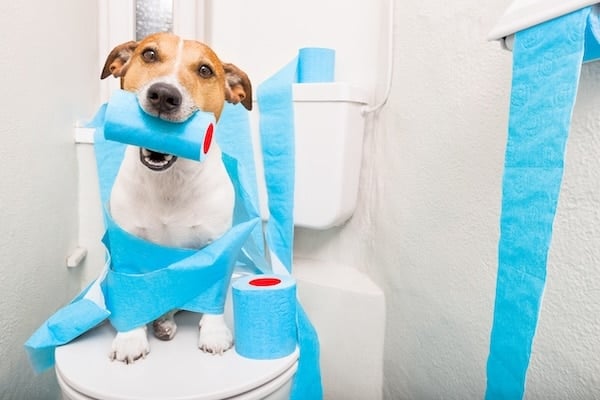
- Keep the toilet seat and lid down to prevent big dogs from drinking harmful chemicals or bacteria and small dogs from jumping in.
- Make sure to unplug appliances, like hair dryers and curling irons, after use and keep the cables stored out of a dog’s reach.
damedeeso via iStock
How To Dog-Proof the Living Room
While the kitchen and bathroom might pose some of the most serious threats to dogs, the living room or lounge also contains items that could be dangerous.
- Move houseplants out of reach—and better yet, swap out any poisonous plants for dog-safe alternatives.
- Properly cover any air or heating vents with well-fitted grates.
- Secure wires from televisions, lamps, stereos, and other items with cable tidies to prevent your dog from chewing them.
- Put away any fragile items, like vases or picture frames, that your new pet can knock over and break—at least until they find their feet.
- Protect furniture with dog-friendly covers or blankets. If your new friend isn’t house-trained yet, consider investing in washable rugs.
- Put away any games or toys that contain small pieces, since these can be a choking hazard to a curious dog.
- Stow any remotes or other small items with batteries out of reach and off low tables.
How To Dog-Proof the Bedroom
Bedrooms are usually pretty easy to dog-proof. Here’s what to keep in mind:
- Store any lotions, medicines, or cosmetics that might be on a bedside table out of reach.
- Hide any electrical wires in an area your dog can’t access.
- Keep shoes and laundry out of reach, since strings and buttons can pose a choking hazard and serious issues if ingested.
- Make sure burrow-loving dogs aren’t sleeping in wardrobes or drawers before shutting them. If you have one of these snuggle bugs, consider investing in a cave bed for them instead.
How To Dog-Proof the Garden
Yards and gardens are important places to dog-proof, especially if your dog will be spending any time in these spaces on their own.
- Check that your fence is tall enough to prevent a dog from climbing or jumping over.
- Make sure there aren’t any gaps or soft dirt along your boundary. If there are, consider a trellis or fencing extension to stop your dog from digging under.
- Choose dog-safe plants and flowers, and avoid any plants that could be poisonous if chewed or eaten by a dog.
- Consider putting mesh fencing around planters, or opt for raised or covered beds.
- Create a barrier to keep your dog away from wooded areas to help prevent tick bites, or invest in a regular flea-and-tick preventive.
- Keep up with yard maintenance and remove any weeds or prickly grasses, like foxtails, that have arrow-tailed seeds that can get lodged in a dog’s skin and fur.
dageldog via iStock
How To Dog-Proof the Garage
If you live in a home with a garage, don’t forget to dog-proof this room, too. “The garage is often an overlooked place where many toxic substances are stored,” cautions Dr Ostermeier.
- Securely stow any chemicals or toxins, such as antifreeze, paint, or motor oil, in a locked cabinet.
- Make pesticides or snap traps inaccessible, either by locking them up or putting them in a place your dog can’t reach.
- Store away any batteries, sharp tools, or small car parts that could present a health risk if your dog were to swallow them.
- Keep clutter to a minimum and check that nothing could fall and injure your pet if bumped.
How To Dog-Proof Your Home for Different Types of Dogs
The tips above are good general guidelines for adult dogs—but some types of dogs benefit from specific dog-proofing strategies. Here’s what you can do for special cases.
Big, powerful dogs
Their height makes many big dogs adept at counter surfing, so take extra precautions with what you leave on countertops and tables. Keep anything you wouldn’t want your dog to eat, whether it’s a slice of cake or a bottle of cleaning solution, off accessible surfaces.
A big dog’s height and weight can also make them a bull in a china shop. “Larger breed dogs may knock lamps or other breakable items off coffee tables or countertops. It sometimes happens while wagging their tail,” says Dr Ostermeier. So keep fragile decor, like vases and photo frames, in higher spots, or secure them with museum putty.
Small, flexible dogs
Tiny dogs can easily slip through fences and gaps in furniture, so make sure that your pet’s spaces are tightly sealed to dog-proof your home for a smaller animal. Baby gates can work well for smaller dogs—as long as your pup isn’t an excellent climber.
Similarly, smaller dogs may find it hard to reach couches and beds. This may be a plus if you’re looking to keep your pet off the furniture, but if you’d like your dog to reach these cosy areas, consider adding a dog ramp or steps to make it safer.
Escape artists
Security is the name of the game when it comes to dogs who are master escape artists. Make sure that any fences are tall enough to prevent climbing or jumping—and if you’re not sure, consider installing a fence extension. Double gates, like at the park, can also help.
Pet cameras and GPS trackers are also great tools for keeping tabs on your dog’s whereabouts.
Indoors, consider installing a baby gate around your front door so your dog can’t slip out when people are coming or going. Make sure all windows are screened and are difficult to push open.
Destructive chewers
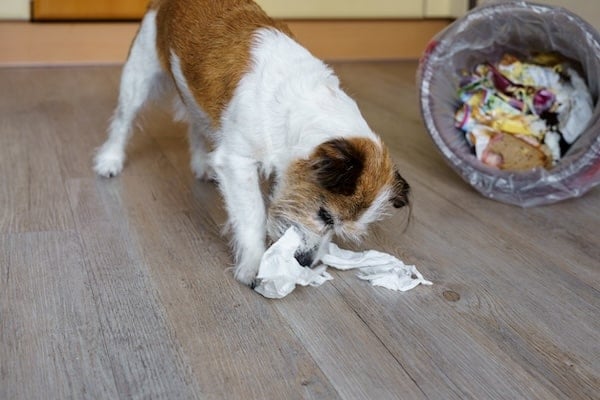
For dogs that are destructive chewers, the strategy is twofold. First, restrict their access to objects that are hazardous for them to chew. Second, provide them with durable chew toys and long-lasting treats to redirect them to a better outlet.
Block off or remove houseplants, wooden furniture, soft fabrics, and electrical cables that could be within reach. This may mean that certain areas of your home might need to be off-limits to your dog, at least initially.
Sonja Rachbauer via iStock
Diggers
Dog-proofing your outdoor space is essential when you have a dog that’s an enthusiastic digger. Fences should be flush with the ground or lined with a barrier material to prevent a dog from digging underneath.
Indoors, invest in an indestructible dog bed or dog bed cover made from thicker, more durable material for a dog who likes to dig at blankets and sofas.
Scratchers
Destructive scratchers are a little less common than chewers or diggers. The first stop is a trip to the vet to rule out any underlying conditions, like fleas, allergies, or anxiety. Next, invest in furniture covers and scratch-resistant barriers to help protect your home.
Installing baby gates to limit access to certain rooms or pieces of furniture can also be helpful, as can keeping your dog’s nails short to reduce their ability to do damage.
Puppies
Puppy-proofing is a slightly different project than getting your home ready for an adult dog. Because they need such close supervision—and pose a danger to so many objects—it’s best to start a puppy out in only a small part of the home.
Their reflexes are also a lot worse than a fully grown dog’s, which means they’ll have a hard time escaping anything they knock over. It’s especially important to stabilise anything your puppy might bump into.
Stairs are also too advanced for most very young dogs, so make sure to block them with a gate.