Whether it’s on your furniture, clothes, or the floor, cat urine is often an invisible problem. You might not even know that it’s there until the scent hits you. So why is it so hard to find?
“Fresh cat urine smells fairly mild, and not too different from dog urine. But as time goes by, it develops a very pungent and sharp odour. That’s due to bacteria breaking down the urine,” explains Dr. Elizabeth Flickinger, PhD, the senior manager of insights and innovation for World’s Best Cat Litter.

If you suspect your cat weed somewhere other than the litter box, cleaning the wee up as soon as possible is key to preventing repeat offences—which means you want to find it fast.
Here are the best ways to detect cat wee, according to Dr. Flickinger.
How To Find Cat Wee
The best way to find cat wee around your home is to use your nose. Since cats typically prefer soft surfaces to urinate on, you’ll want to closely inspect carpeting, bedding, and furniture, as well as any clothes that have been left out on the floor.
Good places to look include:
- Carpet or soft storage under the bed
- Carpet under the couch
- Behind the sofa
- In your laundry basket
- Walls by windows
If you can smell urine but are having difficulty locating the source, consider the following strategies to help you find the source.
Use a black light
A black light or UV light kit, such as this Lepro one, can help you spot urine stains—although keep in mind it will also illuminate things like cleaning detergents and other bodily fluids.
Look for stains
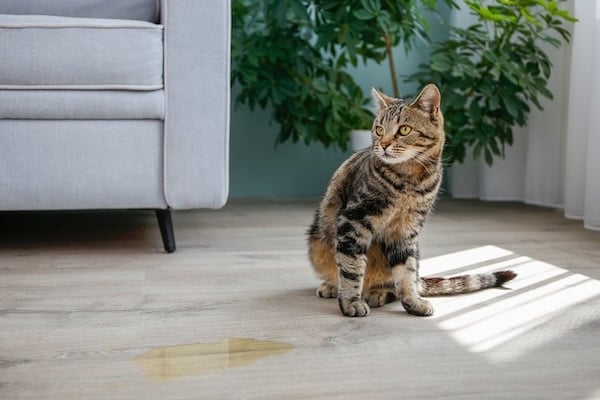
If the urine is already dry, you may be able to see the stain. For urine stains, look for large, puddle-like stains on flat surfaces. For spray stains, you’re more likely to find small concentrated drips or streaks on vertical surfaces.
Feel for stains
While fresh cat wee is warm and wet to the touch, dried stains may have a rough, stiff texture that can distinguish them from the rest of the surface. This can help you identify cat urine if you’re having trouble finding it by scent alone.
Ask a friend to sniff around
Over time, it’s possible to become nose-blind to the smells of your own home, so try asking a friend to sniff around if you’re having difficulty. They might be able to locate the source more easily.
Mukhina1 via iStock
How To Clean Cat Wee
Once you’ve found the cat urine, you’ll want to get out the right cleaning solutions. Avoid using ammonia or bleach, since these chemicals can worsen the smell and create harmful fumes. Instead, try the following:
- An enzymatic cleaner
- Bicarbonate of soda and vinegar
- Hydrogen peroxide and soap
- Club soda and detergent
To get the cat wee smell out of clothes, remember to treat them first for 10 or so minutes with your solution of choice before you throw them in the wash. Don’t dry them until you’re sure the smell is gone.
For carpets, cushions, and mattresses, blotting is the way to go. Blot, soak, blot again, and then air dry the spot, repeating as necessary until the smell is gone.
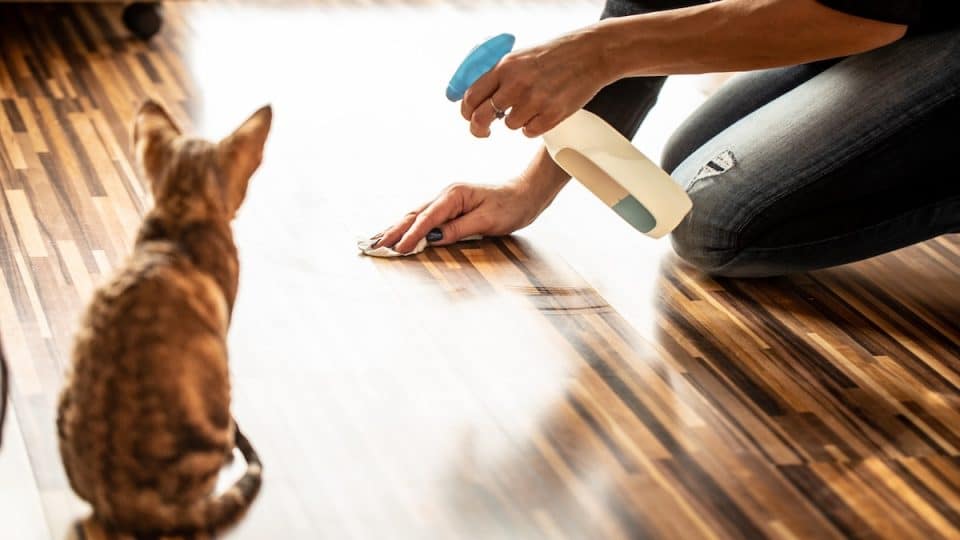
As for hardwood floors, time is of the essence. Quickly remove any liquid, then let your cleaner sit for just five or so minutes before wiping it up and drying the area thoroughly. A hydrogen peroxide and water solution can help lift visible staining.
Is the Smell Cat Wee?
It’s possible the smell you’re detecting isn’t cat wee. Things like mould and mildew, ammonia-based cleaners, and decaying food can also give off a smell similar to cat urine. If the scent is persistent and it’s not obvious where or if your cat urinated, it may be worth considering other causes of the scent.
To check if mould is responsible for the odour, look for visible discolouration and water stains or puddles, especially in places that can get damp, like basements and bathrooms. You may also have to check under carpeting and around the edges of skirting boards.
Freon gas—sometimes used in older fridges and air conditioners—can also smell a little like cat wee, so it’s a good idea to check if any cooling appliances have a leak.
Preventing Your Cat from Weeing Everywhere
If your cat is routinely weeing outside of the litter box, it’s a good idea to reach out to your veterinarian to rule out a medical or behavioural cause. Incontinence can be a sign of serious health issues that you’ll want to get on top of to take care of your friend.
You’ll also want to protect yourself and your home. Cat urine can contain harmful bacteria, and unwanted moisture can lead to damage around your house.
If your vet rules out medical problems, consider moving the litter box to a new location (ideally in a quiet, peaceful area) or try a new type of litter box or a different type of litter. With a little effort and some help from your vet, your cat can regain the ability to use the litter box consistently.