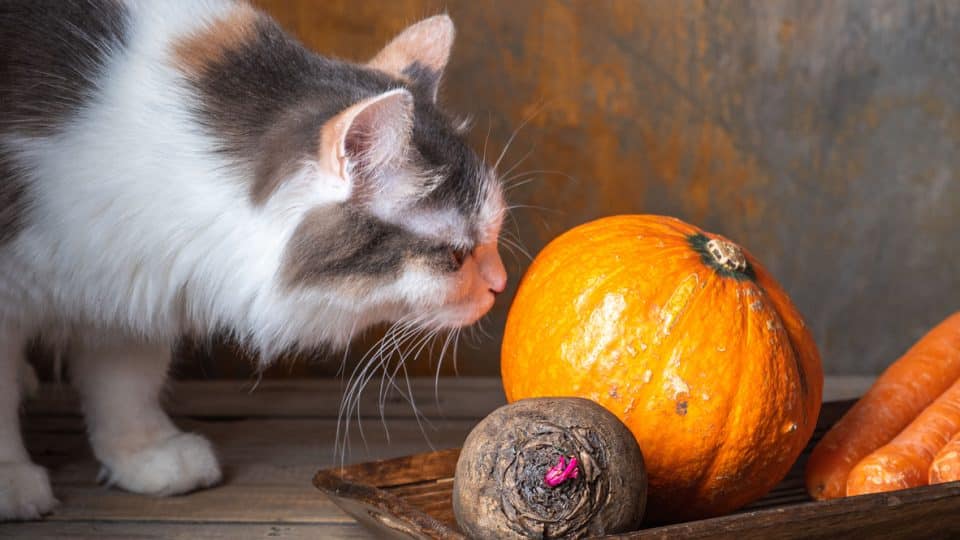
As the air turns crisp, pumpkin-flavoured foods start popping up everywhere—and even though cat food might not have a seasonal pumpkin flavour, cats can eat pumpkin, too.
In fact, some vets recommend adding pumpkin to a cat’s diet to help manage digestive issues like constipation and diarrhoea, says Dr Kathryn Dench, veterinarian and Chief Medical Officer at Paw Origins.
But before you scoop some pumpkin into your cat’s bowl, keep in mind that you’ll only want to serve cats plain, cooked pumpkin in small amounts. Not all pumpkin products are safe for cats. What’s more, giving a cat too much pumpkin can make their stomach issues worse.
Read on to learn more about the benefits of pumpkin for cats, how to serve it safely, and which types to avoid.
Benefits of Pumpkin for Cats
“Pumpkin can be beneficial for cats primarily due to its fibre content and nutritional profile,” Dr Dench says. Potential health benefits may include:
- Constipation relief: Pumpkin’s water content and soluble fibre add moisture and bulk to the stool, helping stimulate movement through the bowel, explains Dr Angelo Maggiolo, veterinarian and Medical Director of VCA County Animal Clinic. This can make it easier for mildly constipated cats to pass stool.
- Diarrhoea relief: Dr Dench says soluble fibre can absorb excess water in the gut, helping firm up loose stools and slow down intestinal transit time in cats with mild diarrhoea.
- Hairball relief: The added fibre may help move swallowed hair through the digestive tract, reducing the chances of hairball buildup, Dr Dench explains.
- Weight control: Pumpkin can add volume to meals without significantly increasing calories, Dr Dench says. This means cats may feel fuller when eating less food, which can help with weight management.
- Nutritional boost: Pumpkin contains beta-carotene, potassium, and antioxidants that can support immune health and overall well-being. That said, Dr Dench notes these nutrients are simply a bonus—pumpkin’s main benefit lies in its digestive support.
Note: Pumpkin shouldn’t be your first approach to treating moderate to severe constipation, diarrhoea, or other digestive troubles. Always contact your vet for these concerns. They can identify the underlying cause and recommend the proper treatment, whether that’s a supplement, medication, or prescription diet.
Does pumpkin act as a dewormer?
You may have seen social media posts suggesting that pumpkin seeds can treat intestinal worms in cats. This is false—pumpkin seeds can’t treat intestinal worms.
If you suspect your cat has intestinal worms, schedule an exam with your vet. They can prescribe a deworming medication that targets the specific type of parasite involved.
What Parts of a Pumpkin Can Cats Eat?
Not all parts of pumpkins or pumpkin types are safe for cats.
Dr Dench shares the parts and types of pumpkin you can give your cat:
- Cooked pumpkin: The cooked inner flesh is the best and safest option for cats. Just give it to your cat completely plain, without adding sugar, salt, spices, or other seasonings. Make sure you puree or mash the pumpkin first so your cat can eat it safely.
- Canned pumpkin: This is a convenient and safe option, as long as it’s 100% pumpkin with no added ingredients. Always check the ingredient list on the can first.
- Roasted pumpkin seeds: Dr Dench says finely ground, unsalted pumpkin seeds contain fibre and fatty acids that may offer mild health benefits. However, you should only give cats a minimal amount—after checking with your vet first!
Important: Avoid feeding cats (and dogs!) canned pumpkin pie filling, which comes premixed with sugar, spices, and sometimes xylitol. All of these ingredients are harmful and potentially toxic to both cats and dogs.
Avoid feeding your cat these pumpkin parts:
- Raw pumpkin: Cats may have difficulty digesting it, and it may cause stomach problems.
- Pumpkin skin: Dr Dench says it is tough and fibrous, and may be difficult for cats to chew and digest. It can also pose a choking risk.
- Whole pumpkin seeds: According to Dr Dench, whole seeds can be challenging to digest and may cause choking. If you’re giving your cat ground seeds, make sure they’re roasted and unsalted.
Possible Risks of Pumpkin for Cats
“While pumpkin is generally safe in moderation, the keyword is moderation,” Dr Dench says.
Too much pumpkin can lead to additional health concerns, including:
- Digestive upset: Dr Dench advises against giving too much pumpkin, especially if your cat has a sensitive stomach. Too much can cause diarrhoea or worsen existing symptoms.
- Nutritional deficiency: Pumpkin should only be a supplement—not a main course. Cats are obligate carnivores, which means they need animal-based proteins and nutrients to thrive. Feeding large amounts of pumpkin could dilute the overall protein and nutrient content of their meals, leading to deficiencies over time. Stick to small portions alongside a complete and balanced cat food.
- Masking underlying health issues: Pumpkin shouldn’t be used to manage chronic constipation or diarrhoea long-term, as these may signal severe conditions like IBD, parasites, or megacolon, Dr Dench explains. She says overuse of pumpkin can delay a proper diagnosis, so it’s best used short-term, with veterinary guidance.
- Weight gain: While pumpkin is low in calories, Dr Dench says excessive amounts can contribute to unwanted weight gain over time.
- Allergies or sensitivities: Some cats may be sensitive or allergic to pumpkin, though this is rare. Introduce any new foods slowly and pay close attention to any adverse effects.
What If My Cat Ate Pumpkin Pie?
Pumpkin pie might be a staple of many fall and winter celebrations, but like many other holiday foods, it’s not safe for cats to eat.
Most pumpkin pies contain added sugar, dairy, and spices like nutmeg and cinnamon. All of these ingredients can irritate your cat’s digestive system and cause vomiting or diarrhoea.
More seriously, some pies (especially sugar-free or low-carb versions) are sweetened with xylitol. This sugar substitute is extremely toxic to cats. Even a small amount can trigger a dangerous drop in blood sugar and cause seizures or potentially fatal liver failure. If your cat eats any amount of pumpkin pie containing xylitol, seek emergency veterinary care immediately.
If your cat sneaks a small lick or nibble of pumpkin pie that doesn’t contain xylitol, they’ll likely be fine. Still, monitor them closely for signs of stomach upset like vomiting or loose stools. If you notice any unusual or concerning symptoms, contact your vet.
To play it safe, keep pumpkin pie and other holiday desserts out of reach.
Pumpkin Serving Size for Cats
The ideal amount of pumpkin for your cat depends on their size and the reason you’re giving them pumpkin. For a 4.5-kg cat, Dr Dench suggests the following guidelines:
- Constipation: Start with 2.5 ml (½ teaspoon) once daily and monitor your cat’s response. You may increase the dose as needed, but always divide it. For example, give half in the morning and half at night.
- Diarrhoea: Start with 1.25 ml (¼ teaspoon) once daily. Slowly increase if needed, in divided doses, and monitor your cat’s reaction.
Most cats will improve with one to four teaspoons of pumpkin daily, but Dr Dench recommends monitoring your cat’s stool for 48 to 72 hours before adjusting the amount. Increase only if needed, based on your cat’s response.
“If there’s no improvement, or if symptoms worsen, stop the pumpkin and consult a vet,” she adds.
Keep in mind that the recommended serving size of pumpkin for cats contains only a small amount of fibre and other nutrients. Always feed your cat a nutritionally balanced cat food and talk to your vet if you have any concerns about their health and nutritional needs.
5 Ways To Give Your Cat Pumpkin as a Treat
Here are some tasty ways to incorporate pumpkin into your cat’s diet:
- Mix into wet food: Stir a small spoonful into your cat’s regular canned food for a fibre boost.
- Serve as a lickable treat: Offer plain pumpkin on a spoon or a lick mat for a fun enrichment activity.
- Stuff into a food puzzle toy: Add a small dollop to a slow feeder or toy to make snack time more stimulating.
- Blend with a bit of tuna water: Combine plain pumpkin with tuna juice or low-sodium broth to enhance the flavour.
- Make pumpkin push pops: Try these limited-ingredient treats made with pumpkin puree, skinless chicken breast, and water.
Other Ways To Promote Digestive Health
Pumpkin isn’t the only way to support your cat’s digestive health. You can also look out for signs they might be having digestive issues, like irregularities in their poop schedules and excess gas.
Check out these guides for more information and options:
- Cat-ulence: Did Your Cat Really Just Fart?
- How Often Do Cats Poop?
- My Cat Eats Too Fast! What To Do About Your Speedy Eater
Just make sure to consult your vet before introducing any new food or supplement, especially if your cat has ongoing digestive issues.