There are a lot of reasons why dog parents are excited about puzzle toys these days, and it’s not just that they’re fun for pups. Puzzle toys are marketed as tools to keep bored dogs occupied. They also claim to soothe anxiety in pups who struggle with separation, build a dog’s skills with their nose and paws, and encourage engagement so powerful it counts toward a dog’s daily exercise.
But can dog puzzle toys really do all that? Are they good for dogs in all those ways?

To find out, we talk to Sara Richter, Certified Dog Behavior Consultant with the International Association of Animal Behavior Consultants. In our research, we find out more about the effectiveness of dog puzzle toys, how to choose the best ones for your pup, and what to know before you buy.
What Are Dog Puzzle Toys?
Puzzle toys come in a lot of varieties, but at the most basic level, all are made to offer your dog physical and mental stimulation.
How they go about it—and how difficult they are—varies, since different puzzle toys target different senses and encourage different behaviours.
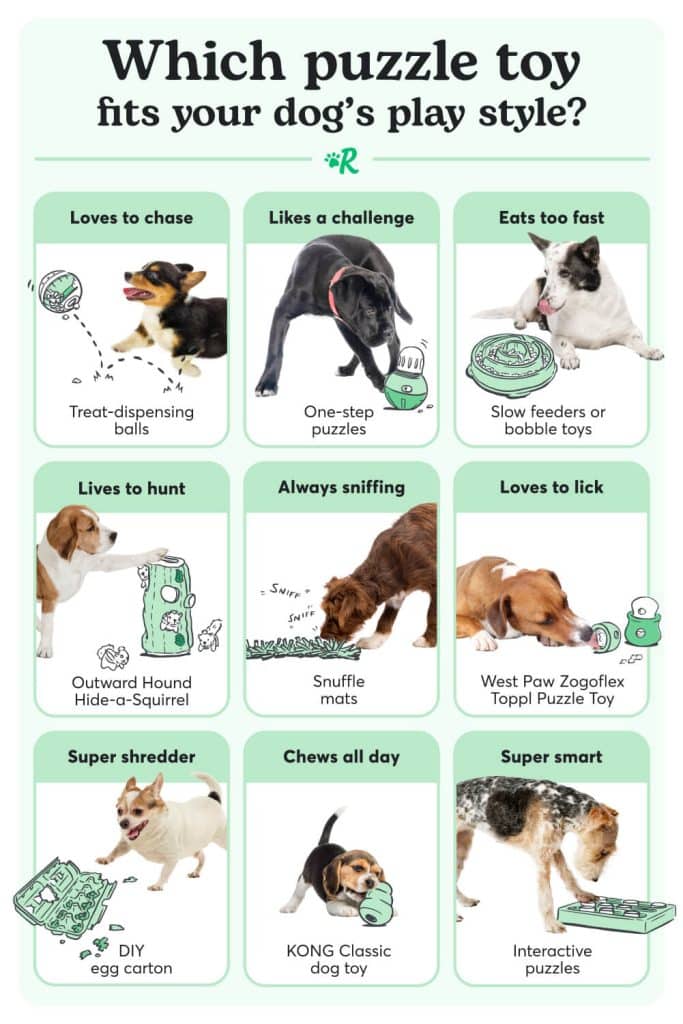
For example, there are puzzle toys for dogs who like to lick. Stuffable puzzles like the KONG Classic and the West Paw Toppl let you fill a crevice with a spreadable treat, so your dog is challenged to manoeuvre it out with their tongue. Lick mats work similarly, offering a flat space with different textures and patterns for you to smear soft treats on top. (You can even up the time and difficulty of a lickable puzzle toy by freezing its contents.)
While puzzle toys that promote licking are good for situations where a dog needs to self-soothe, such as travel or crate time, they’re typically less effective for dogs who aren’t food-motivated.
Other puzzle toys reward curious sniffers, typically by encouraging a dog to forage for cleverly concealed treats. Nose work engages a dog’s brain, and the deep breathing it requires can be soothing.
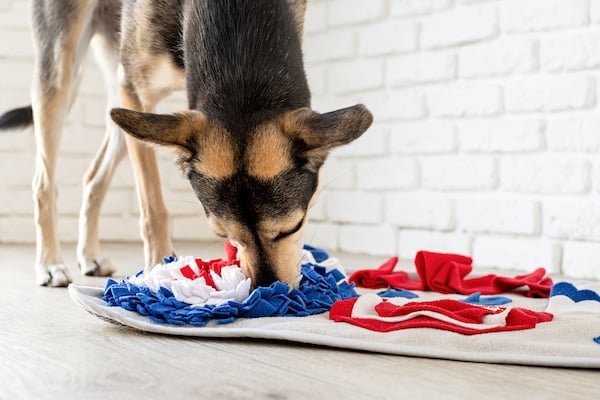
Simple puzzle toys like snuffle mats help harness this natural behaviour by encouraging dogs to sniff out treats or kibble hidden in the mat’s fabric tendrils. Some dogs can’t get enough of snuffle mats like the Paw5 Snuffle Mat. But they’re not the best choice for dogs who aren’t motivated by food, need a greater challenge to seek out treats, or are aggressive chewers.
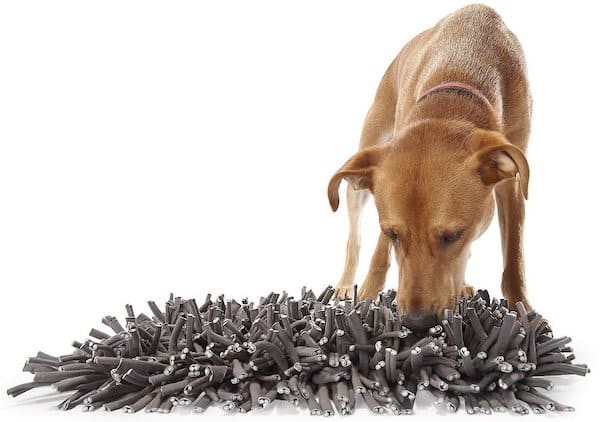
Snuffle mats encourage simple nose work and deep breathing.
Puzzle toys for chewers add a mental challenge to a bone or treat. West Paw’s Qwizl, for example, has a tough, bouncy exterior that can stand up to a dog’s chompers. This type of puzzle toy puts a chew-resistant obstacle between the snack (often a pizzle stick or a similar long treat) and your dog’s teeth.
The benefits are longer-lasting treats and an extended chewing experience—of course, pups that aren’t big chewers may not enjoy it.
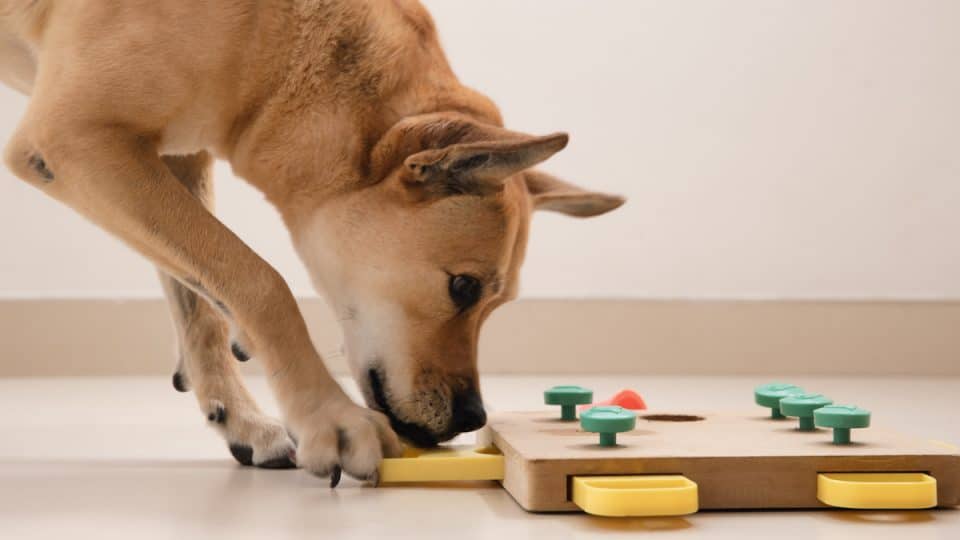
Other puzzle toys target dogs who use their paws to play as they bat and slide objects around. The difficulty level of these interactive toys varies based on your pup’s skill set. For dogs just starting out, beginner puzzles like Our Pets Sushi Toy are great as they usually only require one type of problem-solving action (moving a sliding piece over).
Once your dog gets the basics down, you can then start levelling up to more advanced puzzles like the Nina Ottoson Dog Worker Toy, which requires multiple actions—such as twisting, sliding, and spinning the toy pieces—to access the treats. These toys do require a bit of work from your dog, so clever and food-motivated pups may benefit from them the most. Impatient or less treat-driven dogs may lose interest or get frustrated quickly.
For dogs who aren’t food motivated, there are hide-and-seek puzzle toys like the Hide a Squirrel: a plush log with holes that you can stuff with soft, squeaky squirrels. Your dog then digs out the plush squirrels with its paws and mouth and plays with them as a reward. These toys are great for prey-driven burrowers and diggers, but may not be interesting enough for pups who are more food-focused or less motivated by play.
Finally, there are toys for movement-seeking dogs and chasers. Toys that bounce, wobble, or roll help keep your dog interested by dispensing treats unpredictably. Some, like the Starmark Bob-a-Lot, have adjustable openings so you can change the level of difficulty.
Others have a challenging texture that dispenses treats at random to keep your dog guessing. The Omega Paw Tricky Treat Ball is a good example; its dimpled design creates random, chase-worthy movements when it rolls and bounces. These puzzles can be great for ball enthusiasts but may not be suitable for senior dogs or pups with mobility issues.
Are Puzzle Toys Good for Dogs? Experts Answer
While options are plentiful, do these puzzle toys deliver on their claims?
In general, the answer is a resounding yes—puzzle toys are good for dogs’ mental and physical health. Here’s the breakdown from our conversation with dog behaviour consultant Sara Richter.
Do dog puzzle toys alleviate boredom?
Boredom is one of the most common causes of destructive behaviour. Redirecting a dog’s attention to a puzzle toy when they’re looking for something to do can help keep them occupied in more positive, preferable ways.
“Puzzle toys encourage sniffing, licking, chewing, and movement, which can all aid in arousal reduction and provide appropriate outlets for these activities,” explains Richter. “This will decrease the dog’s need to seek opportunities to engage in these behaviours elsewhere.”
Do dog puzzle toys offer exercise as good as a walk?
Similar to exercise, the mental stimulation provided by puzzle toys can help tire out your pup. Many puzzle toys, such as treat-dispensing balls, also engage your dog physically, providing extra activity in their day.
Puzzle toys shouldn’t be a long-term replacement for exercise, but they are a good alternative when other opportunities are limited, like in extreme weather or when a dog is injured or in recovery.
Ilona Shorokhova via iStock
Do puzzle toys help calm an anxious dog?
Yes—focusing on a toy can help some dogs self-soothe during times of stress, like periods of separation.
Richter cites snuffle mats as a good example of how puzzle toys can serve as calming aids. “[A snuffle mat] encourages deep breathing through scent exploration, and it can focus their mind and help to reduce their physiological experience of stress,” she says. Other toys, such as KONGs or lick mats, can encourage licking, another self-soothing behaviour for dogs.
Do puzzle toys build a dog’s skills?
Certain puzzle toys can help build your dog’s skills, not just through mental stimulation but also by encouraging them to perform tasks to earn a reward. Toys with movable components and hidden treats are well-suited for this, as they require dogs to use different parts of their bodies to forage.
Since these toys can range from very simple to quite challenging, Richter advises starting with simpler puzzles. “Start small, let your pet build confidence, and grow their enrichment plan as their skills develop,” she says.
Another potential benefit of these toys? Cultivating independence. Richter says that puzzle toys are beneficial for building confidence, particularly in younger and anxious dogs.
Infographic by Rover
Are There Any Drawbacks to Dog Puzzle Toys?
Some dog parents may be concerned that having their dog receive food through a puzzle, as opposed to providing food directly, seems unkind—but, as Richter explains, that’s not really the case.
“There is a phenomenon in animal husbandry known as ‘contrafreeloading’ that occurs when animals are provided both easily accessible food from a bowl and food that requires effort to acquire,” she says. “Most often, they prefer the option that requires effort.”
First described by animal psychologist Glen Jensen in an experiment in 1963, contrafreeloading has been observed across many species. “We can observe this phenomenon in our pets when we offer them the same choice between food in a bowl and a puzzle toy,” adds Richter. Just like humans, healthy dogs often welcome a challenge and enjoy ways to stimulate their bodies and minds.
That said, while puzzle toys can be helpful, no toy can completely meet all of your dog’s needs. Richter explains that puzzle toys are just one tool in the kit, which should be rounded out with other enrichment activities such as socialising with other dogs, bonding with pet parents, and training.
It can also be challenging to determine which type of puzzle toy is right for your dog. What’s a hit with one pup can be a dud for another. “I’ve seen many pet owners try one or two products and find that their pet is not showing a great amount of interest, so they give up,” says Richter. “It can be a process to determine what your pet likes and to familiarise them with the process of solving puzzles.”
Not to mention that it can take time for dogs to learn how to solve puzzle toys, even easier ones. Richter notes that this sometimes stems from prior learning — such as being taught a concept like “leave it” — which can suppress exploration and make dogs hesitant to interact with the toy.
“If you’re not having success with puzzle toys or other forms of enrichment, it can be helpful to reach out to an accredited training or behaviour professional who can provide personalised tips and advice for your pet,” she says. Richter also recommends observing your dog’s interactions with objects in general to determine what might suit them. “Do they use their nose, teeth, or paws? Are they nervous? Or do they dive right into sniffing, licking, chewing, and batting it around?” she asks.
Final Verdict: Do Dogs Need Puzzle Toys?
Richter sums it up nicely. “Puzzle toys offer physical and mental stimulation that can enrich a dog’s life and promote mental and physical health and wellness,” she says. They’re useful for all kinds of pups: bored dogs prone to destructive behaviour, anxious dogs learning to be more independent, active dogs looking to build skills, and dogs who need to exert energy on a day you’re just too busy to take them on a long walk.
Most dogs are likely to see mental and health benefits from puzzle toys, but these pups in particular may benefit the most:
- Bored dogs who need mental stimulation
- Dogs with situational anxiety who need help self-soothing
- Active and high-energy dogs who enjoy training and skill-building exercises
- Dogs who sometimes miss walks due to weather or injury
Puzzle toys aren’t, however, replacements for bonding, training, socialisation, and regular exercise—they’re supplements. And they can’t address serious behavioural issues on their own. Should your dog have severe separation anxiety or frequent destructive behaviour tendencies, then it’s time to enlist the help of your veterinarian and/or a certified dog trainer or behaviourist.
There are also a few dogs who should exercise caution around puzzle toys, including:
- Senior dogs/pups recovering from surgery who might find puzzles too physically demanding
- Dogs on a restricted diet or who are trying to lose weight (for food puzzle toys)
- High anxiety, fearful, or destructive dogs
- Pups who are prone to frustration
If your pup falls into one of these categories, there are still other toys that provide mental and physical enrichment, like robotic toys, automatic ball throwers, and tug toys for solo play.
How We Chose
The products featured here were selected based on our hands-on testing, a comprehensive review of customer reviews across a wide range of retail platforms, and interviews with experts. We prioritised puzzle toys made from durable, high-quality materials and highly recommend them. We’re also guided by our experience living and playing alongside our much-loved, strongly opinionated pups, who are never stingy with their feedback.
Pet Parent Resources
Looking to keep your dog occupied when you’re away? Explore Rover’s dog boarding services to find an experienced pet sitter in your neighbourhood!