It’s no secret that the cost of living goes up each year. In 2026, the cost-of-living adjustment (COLA) rose by 2.4%. But have you thought about how your pet’s cost of living might rise? This year, dog parents can expect their canine companions’ costs to rise comparably, at a rate of roughly 2%.
According to a Rover survey* of 1,000 pet parents, Canadian pet parents are feeling the most financial pressure from vet visits (56%), food costs (45%) and medications (27%). Nearly 70% are very or somewhat concerned about maintaining their preferred level of pet care over the next 12 months.
At Rover, we’ve observed this cost rise as we refresh our data each year, researching prices across the nation and interviewing experts.
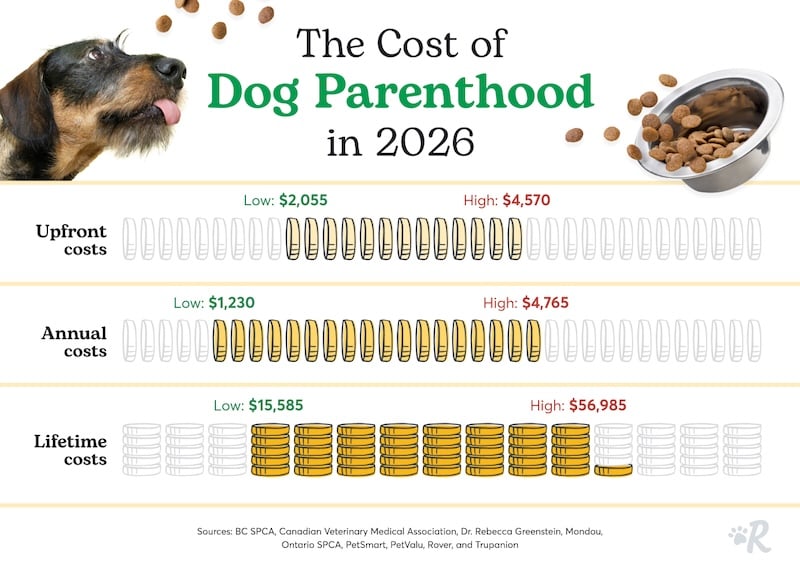
From the moment you bring them home, your dog’s lifetime care can range from $15,585 for a small breed to $56,985 for a large breed. The costs vary significantly based on breed, size, and ongoing health conditions, with smaller dogs more likely to be less expensive over time.
Looking for medium breed representation? The lifetime costs of a medium-sized dog range between $28,715 and $40,820.
If these costs feel overwhelming, remember that the average healthy dog has a lifespan from 10 to 13 years. Understanding the costs you’ll need to anticipate can help you stay on budget.
Below, we’ve broken down the costs of dog parenthood into four categories: upfront costs when you first bring your dog or puppy home, annual essentials, and unexpected costs that many forget to budget for.
Cost of Adopting or Buying a Dog
When it comes to choosing a pet, the cost of care is often a lower priority than factors like a dog’s size and breed. However, a dog’s size and breed play a major role in the initial costs for supplies, such as dog food and toys to flea medicine. For example, a dog’s weight can determine whether you are paying $50 or $290 per month for food.
In 2026, the upfront costs of bringing your dog home range from $2,055 to $4,570. That’s 3.4% higher than in 2025. One culprit is vet costs, which have continued to rise beyond Canada’s national inflation rate in 2026. And puppies need a lot of shots and check ups.
Knowing what to expect and how to budget can help. Here’s a look at the up-front costs of bringing a pet home in 2026.
Up-front costs of bringing your dog home:
| Item | Low | High |
|---|---|---|
| Adoption fee | $410 | $715 |
| Breeder costs | $2,750 | $4,250 |
| Spay/neuter | $665 | $950 |
| Microchip + ID | $55 | $105 |
| Initial vet exam | $115 | $125 |
| Vaccinations | $110 | $500 |
| Preventatives | $65 | $370 |
| Essential supplies | $305 | $850 |
| Grooming supplies | $185 | $395 |
| Food and treats | $60 | $300 |
| Cleaning supplies | $45 | $125 |
| Pet license | $30 | $60 |
| Toys | $10 | $75 |
First up, adoption vs. breeder fees
Generally, the cost of dog adoption increases as your criteria become more specific. A puppy or popular breed will cost more than a senior or mixed breed. Fortunately, the adoption fee often includes many of the up-front costs, such as the spay/neuter surgery, a microchip, and the first round of vaccines. Adopting a dog from a shelter is the most budget-friendly way to welcome a dog home.
On the other hand, breeder prices range from $2,750 to $4,250, depending on the breed and sex of the dog. Getting a dog from a breeder may also mean spending up to $1,450 more to cover a puppy’s vaccines and spay/neuter surgery.
Vet visits, surgeries, and vaccinations
The cost of vet visits and vaccinations will vary based on the age of your dog. For example, puppies require regular vet visits and vaccinations until they are six months old — and they are more likely to get into trouble in their first year. Adult dogs typically need only annual check-ups as part of a preventive care routine.
First-year veterinary service costs have risen, with the total price of year-one office visits, preventatives, and vaccinations increasing by up to 9%.
For larger breed dogs, a vet may recommend waiting until they are fully developed, around two years old. If you choose to wait, expect higher spay/neuter costs due to your dog’s increased weight.
Cost of new dog supplies: essential, grooming, and cleaning
You should expect to spend more on essential puppy supplies than on essential adult dog supplies — unless you are bringing home a second dog. In that case, many of these supplies are likely already in your home.
How much you initially spend on your dog’s essential supplies, from grooming to gear, may depend on whether you are buying generic or premium brands. We researched Canadian pet stores, from Pet Valu to Mondou, to determine the average cost of essential dog supplies:
- Toys: $5 to $40
- Treats: $3 to $20
- Food and water bowls: $5 to $60
- Leash: $40 to $85
- Collar and harness: $55 to $285
- Crate(s): $115 to $335
- Dog bed(s): $80 to $105
- Poop bags: $15 to $40
- Pee pads: $10 to $65
- Stain and odor removal: $10 to $60
- Brushes: $20 to $55
- Shampoo and conditioner: $15 to $35
- Pet hair dryer: $80 to $190
We didn’t factor in the possibility of buying these items twice, but it is important to consider how destructive a puppy can be. A teething puppy, for example, will go through toys and chews at a rapid pace. A large-breed puppy may outgrow multiple harnesses in the first year.
When it comes to getting premium items like fancy beds or aesthetic dog crates, we recommend waiting until your puppy has matured a little.
How Much Does a Dog Cost Per Year?
Thankfully, the initial expenses don’t always reflect the ongoing annual costs for a dog. If your puppy has become an adult dog, you may see a 27% decrease in your yearly spending. That’s because you’ll already have certain essentials, such as crates, beds, and harnesses, and you’ll likely see fewer vet visits.
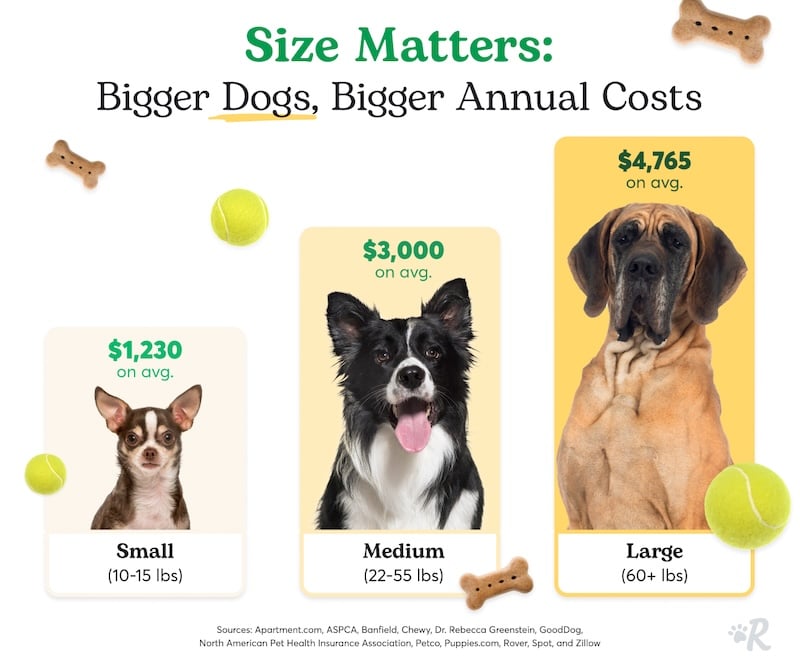
In 2026, the average annual cost of a dog ranges from $1,230 to $4,765. Your dog’s age can also impact this cost. Based on our estimates for supplies, vet visits, and food, we found that dog parents typically spend:
- $1,400 to $5,525 per year for a puppy
- $1,060 to $4,005 per year for an adult dog
- $2,120 to $5,715 per year for a senior dog
Factors like your dog’s size, breed, and medical needs make a big difference in what you’ll spend. In fact, breed size plays a large role in the cost of dog care. Smaller breed adult dogs can cost up to 73% less per year than large- or giant-breed adult dogs.
Note: The above costs for a senior dog do not include end-of-life care, although we have factored in two annual vet visits, one round of blood work, and medications.
Annual Cost of Dog By Age
| Items | Puppy | Adult | Senior |
|---|---|---|---|
| Food | $655 to $3,460 | $595 to $2,605 | $640 to $2,590 |
| Treats and chews | $35 to $115 | $35 to $285 | $35 to $285 |
| Gear and supplies | $465 to $1,130 | $20 to $85 | $145 to $345 |
| Vet visits | $105 to $350 | $105 to $200 | $210 to $400 |
| Preventatives | $130 to $370 | $180 to $325 | $130 to $225 |
| Training sessions | $160 to $325 | $160 to $325 | $0 to $45 |
| Dental hygiene | $20 to $45 | $445 to $885 | $560 to $1,245 |
| Pet insurance | $420 to $1,620 | $540 to $1,800 | $1,020 to $4,020 |
| Toys | $10 to $75 | $5 to $70 | $5 to $40 |
Costs that increase as a dog ages
- Health checkup: While puppies need more frequent vet visits in their first year, the average adult dog typically requires only one wellness checkup per year. However, as your dog becomes a senior, they’ll need to visit the vet twice a year for preventative care and bloodwork.
- Grooming: Grooming sessions are often charged by the hour. The bigger your dog gets, the more time a groomer will need for bathing and brushing.
- Dental cleaning: The cost of dental cleanings increases with your dog’s size and age due to the expense of anesthesia and the additional time required to clean their teeth.
- Senior dog care: Senior dogs require extra supplies, such as mobility aids and joint supplements. Life-extending medications may also become part of your budget during your dog’s golden years.
Costs that decrease or stay the same
- Food: Surprisingly, food costs tend to decrease as your dog ages, because adult food is usually less expensive than puppy food. As your dog becomes a senior, food costs can fluctuate either way: your dog may need to eat fewer calories, but they may also need a more expensive prescription diet.
- Toys: Dogs typically play with fewer toys as they become less active adults. Toys shift from an annual cost to an optional add-on.
- Flea and tick preventatives: Flea and tick prevention costs are dependent on your dog’s weight.
- Poop bags: Your dog’s size, along with your personal preferences regarding factors such as scent, eco-friendliness, or quality, also affect the cost of poop bags. You may go through these bags a little faster as your dog ages and starts to poop multiple times during a walk.
- Training: As your dog matures and settles into their personality, basic training might give way to more advanced skills or sports. As your dog matures, however, you’re likely to see training become an as-needed expense.
- Gear: In the first year of dog ownership, you may spend up to $510 on harnesses, carriers, or leashes. This cost can drop to as low as $20 to $85 per year once your dog is an adult.
What Is the Monthly Breakdown of Dog Expenses?
It may be easier to break down your budget into monthly expenses so you know how much to set aside.
On average, Canadian dog parents can expect to spend between $105 and $400 per month on their dog’s care.
To help lower the monthly lift, Canadian pet parents are using saving strategies like loyalty/rewards programs (53%), buying in bulk (45%), and clipping coupons or using promo codes (34%).
In response to inflation or tariffs, 44% of pet parents have switched their pet’s regular products (e.g., food, treats) to a different brand that’s made or sourced locally.
What Additional Expenses Should You Budget For?
From emergency visits to dog boarding, the average cost for additional dog-related expenses ranges from $545 to $2,170. Depending on your lifestyle or the age of your dog, you can expect to pay for these services once, once a year, or once every few years.
That’s a lot, especially since one in three (39%) Canadian pet parents report they wouldn’t be able to cover the cost of an emergency vet visit without taking on financial debt. Here are the stats that can help you plan.
| Low | High | |
|---|---|---|
| Emergency vet bills | $260 | $1,625 |
| Diagnostic testing | $100 | $195 |
| Dog care services | $130 | $215 |
| End of life care | $840 | $1,310 |
| Misc | $175 | $275 |
A stubborn puppy who refuses to be potty trained or chews on baseboards may cause you to lose your security deposit ($1,600 to $2,300). If an adult dog eats a sock or gets into a bag of candy, they may need to go to the emergency room. Understanding these costs can help you calculate how much to set aside each month in preparation for a rainy day.
Emergency vet visits and diagnostic testing
Emergency vet visits are often unexpected. The typical visit starts at $260 and can easily reach $1,625, depending on whether your dog needs additional testing or overnight care. If the cause of your dog’s condition is unknown, your vet may recommend diagnostic testing.
Diagnostic testing can help identify chronic dog illnesses and diseases like cancer, parasite infections, Addison’s disease, and more.
Dog care services: boarding, walking, and day care
Dog enrichment costs vary based on your dog’s needs and your location. For example, a puppy may need more frequent walks to maintain their potty training schedule. For services like dog walking, doggy day care, and dog training, you can expect to pay $130 to $215 per year on average.
If you have a reactive or anxious dog, you may spend $975 more on training or boarding to help your dog stay safe. While at-home training is possible, first-time dog parents of sensitive dogs may benefit from professional help. Fortunately for these high-needs dogs, virtual dog training can be just as effective and often cheaper than in-person training.
Grooming costs for severe matting
If you have a breed with a coat that requires regular maintenance, like a Havanese or large Poodle, put aside $160 to $1,100 per year for one to four professional grooming sessions. While some dog owners try to save on grooming costs with at-home care, situations like severe matting, rolling in sticky substances, or needing anal gland expression are when a professional groomer may be appreciated.
On average, a high-maintenance dog needs to be professionally groomed every 8 to 12 weeks.
End of life care for dogs
It’s difficult to think about saying goodbye to our beloved dogs, but it’s important to budget for it. A common sentiment around end-of-life care for dogs is, “Better to be one day early than too late.” Financial planning can help so that costs do not become a reason to choose a different service during an emotional time.
Typical costs for end-of-life care can range from $840 to $1,310, depending on your dog’s circumstances and your preferences. In-home euthanasia and private cremation, which many pet parents prefer, will push care toward the top of the range.
Additional Resources
Socializing Your Rescue Dog
Bringing a new dog home can be like introducing a kid to a new park. You’ll need to teach them how to play nice, aka be polite to your family and other pets. Read our guide to socializing your rescue dog.
How to Bond with Your Dog
A little love can go a long way to nurturing a calm, confident dog. Make your home your dog’s new safe space by building positive associations when you bring them home. Here are tips and tricks to foster a stronger bond with your new pup.
Five Basics for New Puppy Parents
Patience is a virtue when it comes to puppy parenting. Besides getting all your doggy gear ready, you’ll also want to put together a training plan. Read up on our top tips for new puppy parents.
*Methodology: A Rover survey of 1,000 pet parents conducted in May 2026, via Pollfish.
Interested in learning more about services Rover provides?
Dog Boarding | Pet Sitting | Dog Walking | Doggy Day Care | House Sitting