- Not a substitute for professional veterinary help.
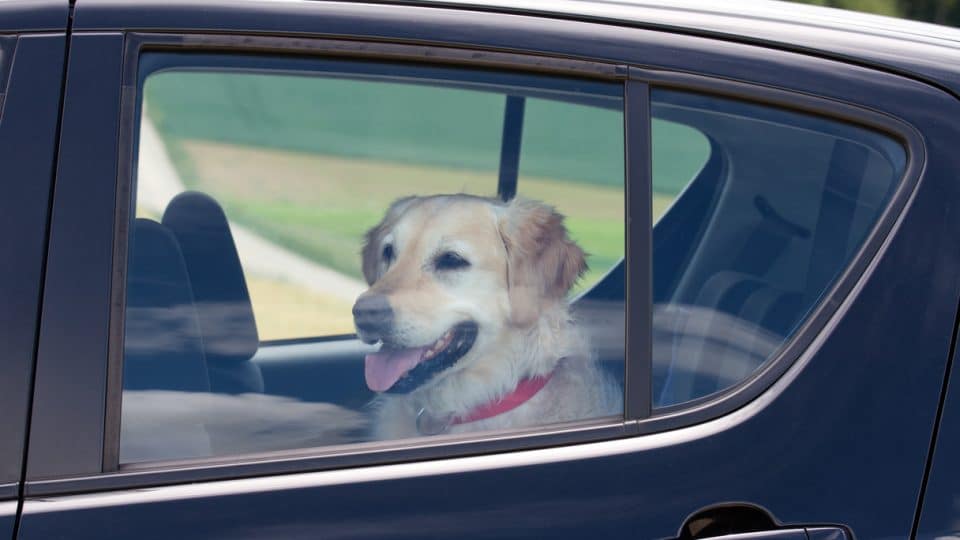
It’s a summer’s day and you’re on the way home from walking your four-legged pal when you remember you need to swing by the grocery store to collect some ingredients for dinner. Will it be OK to leave your dog in the car for 20 minutes, if you park in the shade?
Not so much. “It is rarely okay to leave your dog in a car, even on cool days,” states Dr. Carly Fox, a senior veterinarian in the Emergency & Critical Care Service at the Schwarzman Animal Medical Center. “A 70°F day outside can cause temperatures inside cars to reach nearly 100°F—and dogs can overheat very quickly, especially brachycephalic dogs.”
Let’s take a closer look at the hazards that hot cars can pose to our canine pals—and why leaving your car window open is not a solution.
How Hot Can It Get Inside a Car?
Temperatures can reach notable heights in cars, and faster than you might expect.
As data from NoHeatStroke.org shows, outside temperatures—even on “cooler” days—can quickly feel much hotter in cars. The chart below shows how rapidly car temperatures can rise inside a car.
| Outside temperature | Time passed | Car temperature |
| 70°F/21°C | 5 minutes | 80°F/26.6°C |
| 15 minutes | 94°F/34.4°C | |
| 30 minutes | 104°F/40°C | |
| 80°F/26.6°C | 5 minutes | 90°F/32.2°C |
| 15 minutes | 104°F/40°C | |
| 30 minutes | 114°F/45.5°C | |
| 90°F/32.2°C | 5 minutes | 100°F/37.7°C |
| 15 minutes | 114°F/45.5°C | |
| 30 minutes | 124°F/51.1°C |
It’s also tricky to predict other factors that could affect your dog when they’re waiting in your car—such as humidity and sun intensity or your pet’s stress levels or underlying health conditions, says Dr. Kaylyn Tarver, DVM, emergency veterinarian at VEG ER for Pets in Pleasant Hill. For example, as the sun moves, so will the shady spot, leaving your dog exposed to the sun’s rays.
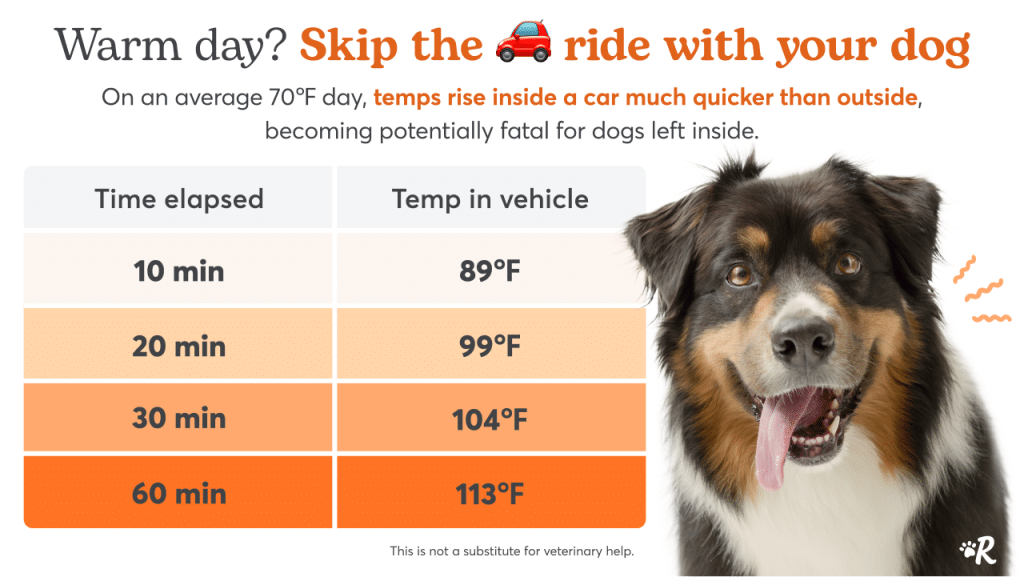
Infographic by Rover
Open windows won’t solve high temperatures
“Keeping a window open does not make leaving a dog in a car safe during summer,” states Dr. Tarver. “Temperatures inside a parked car can rise dramatically, even with a window cracked.”
A 2005 study looking at temperatures in cars that had a window left slightly open revealed that things can still get very hot. In outside temperatures of 32°C, inside temperatures reached almost 42°C in just 10 minutes, and 48°C in 30 minutes.
Be careful re-entering your car
If your car has been in the sun for a few minutes, the seats may overheat and burn your paws, especially if the seats are leather. Fortunately, you can take steps to help minimize the risk. For instance, “if you know the seats can get particularly hot after sitting in a parking lot, make sure to have a blanket available to cover them for your dog to lay on,” suggests Dr Fox.
If traveling from home, she advises starting your car earlier to allow the AC to cool down the car before you get in.
Health Risks Of Leaving Your Dog In a Car
According to PETA, in the last five years, almost 2,000 companion animals in the US were rescued from dangerous heat-related situations, with many of these being dogs left in hot cars. On top of this figure, 424 pets sadly died. These are only reported incidents, so the number of affected animals is likely much higher in reality.
Heatstroke can be a fatal health condition, resulting in seizures and organ failure, and this can happen rapidly to a dog in a hot car. Signs of heatstroke include panting, vomiting, excessive drooling, and stumbling.
Dr Tarver says other health issues can also arise:
- Dehydration: Leading to issues ranging from weakness and lethargy to kidney damage or failure
- Shock: Can lead to sepsis (which poses a death risk) or issues relating to the immune system or heart
- Multi-system organ failure: Heat can affect a dog’s organs, leading to internal bleeding and permanent damage
- Gastrointestinal damage: Effects range from vomiting and diarrhea to chronic issues, such as malabsorption
- Neurological damage: High temperatures can cause brain swelling, resulting in seizures and loss of consciousness, and may lead to permanent neurological damage

Infographic by Rover
What other risks do cars pose to dogs?
Even if it’s not beach-friendly weather outside, leaving your dog in a car can pose other risks to their physical and mental wellbeing.
“Physical injuries can occur from chewing harmful objects, entanglement, or escape attempts,” says Dr Tarver. She notes that poor ventilation may lead to breathing difficulties, while being left alone (especially in a confined space) can cause dogs to feel anxious or distressed—which, in turn, may trigger pre-existing medical conditions.
Plus, Dr. Tarver adds, it’s important to consider the theft risk associated with leaving your dog unattended.
Is It Illegal to Leave a Dog In a Car?
Depending on where you are, you may be surprised to learn there are restrictions around leaving your dog in a car.
Around 30 US States (you can find a list here) have laws that prohibit you from leaving an animal in an unattended vehicle in conditions that could endanger their life. These not only include hot temperatures, but also colder temperatures and lack of ventilation. Many also have laws that protect citizens or law enforcement from legal consequences if they break into a hot car to rescue a distressed animal (known as the “Good Samaritan” law).
Varying by State, penalties for leaving your dog unattended in a car and facing dangerous conditions range from a fine to imprisonment.

Infographic by Rover
If you have to leave your dog in a car, make sure…
In an emergency situation, you might have to leave your dog in your car for a few minutes. If you have absolutely no other option, Dr. Fox recommends the following steps:
- Leave your car’s temperature control system on to avoid heat increases
- Keep your car (and dog) in view or ask someone to keep an eye on them while you’re away
- Park in a shady spot
- Ensure your dog can access a water bowl
- Leave a note for passers-by to help avoid a rescue break-in
However, as noted in the chart above, even 5 minutes can be risky. It is recommended keep your dog at home rather than leaving them unattended in a car. The above precautions do not guarantee your dog will be OK.
What to Do If You See a Dog In a Hot Car
If you see a dog left unattended in a hot car and in distress, taking the following steps can help ensure their wellbeing and safety:
- Take a photo of the car and its license plate on your phone
- Call your local animal control or law enforcement, depending on your city
- If you’re near any stores, ask the manager or a security guard to make an announcement giving a description of the car and its license plate to notify the owner
- Wait by the car until the owner returns
If your State has a Good Samaritan law, you may be able to rescue the dog yourself. Only do this if you are certain of your State’s law and follow any required steps. These may include:
- Contacting law enforcement first before taking any action
- Having a reasonable belief that the animal’s life is at risk
- Using no more force than necessary to enter the car
- Staying with the animal until law enforcement arrives
The following signs may indicate a dog is in pain due to high temperatures. According to Dr. Tarver, the symptoms occur in order of progression:
- Excessive panting
- Excessive drooling
- Restlessness, pacing, or whining
- Lethargy or weakness
- Pale or bright red gums
- Vomiting and/or diarrhea
- Stumbling or trouble coordinating movements
- Increased, rapid heart rate
- Collapsing or seizures
Remind Your Friends and Family About the Risks
While leaving a dog in a hot car poses various health and safety concerns, chilly conditions can be just as hazardous and lead to issues such as hypothermia. As a rule of thumb, Dr. Fox advises people to avoid leaving their dog in the car when outside temperatures are above 60°F.
“Leaving your pet in the car when it is cold out can also be dangerous, as cars can retain cold temperatures like refrigerators,” she adds. The best option, states Dr. Fox, is to leave your dog at home or take them with you on the errands.
Educating your family, friends, and neighbors can also help prevent beloved is it okay to leave a dog in a hot cardogs (and other pets) from overheating or dying in hot cars. If you are going on vacation and leaving your dog with a sitter, remind them not to take your dog on any errands in the car.
The Animal Legal Defense Fund has a “hot car flyer” you can print and hand out to others or share on social media. You could also contact your local council or state representatives and encourage them to strengthen legislation around animal protection.